If you’ve held USDT, USDC, or any other stablecoin in the last year, you’ve been quietly living through one of the biggest structural shifts in crypto history — and most people barely noticed it happening. Stablecoins, once the least regulated corner of crypto, are now one of the most tightly controlled. Here’s what actually changed in 2026 and what it means if you hold, trade, or accept stablecoins.
From “Unregulated Territory” to Licensed Financial Infrastructure
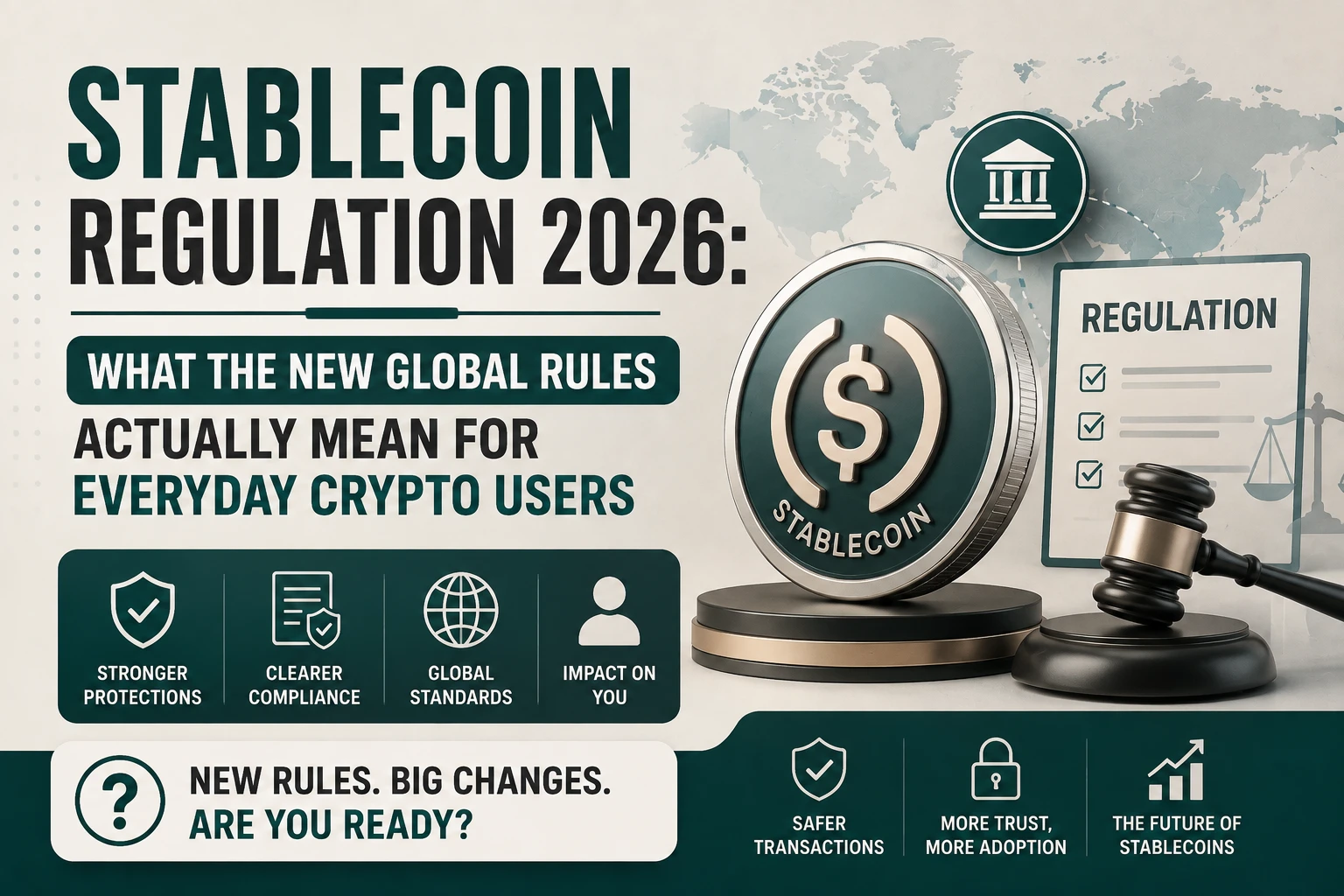
As of 2026, stablecoins are governed under dedicated law in seven major economies — the United States, European Union, United Kingdom, Singapore, Hong Kong, UAE, and Japan. Every one of these frameworks now requires full reserve backing, licensed issuers, and guaranteed redemption rights, effectively treating stablecoins as regulated payment instruments rather than speculative crypto assets.
In the US, this shift started with the GENIUS Act, signed into law in mid-2025, which gave the country its first federal framework specifically for payment stablecoins. In Europe, the Markets in Crypto-Assets (MiCA) regulation has been fully live since mid-2024 and continues to expand in scope through 2026.
What Actually Changed for Stablecoin Holders
1. No more interest-paying stablecoins. Nearly every major regulatory regime now bans stablecoin issuers from paying interest directly to holders. The sky-high 15–20% stablecoin “yields” common a few years ago are essentially gone from regulated products — what remains typically behaves more like a savings account, in the 3–5% range, and usually comes through a separate lending or DeFi product rather than the stablecoin itself.
2. Reserve backing is now mandatory and auditable. Regulated issuers must hold high-quality, liquid reserves — typically short-term government debt — rather than the more opaque reserve compositions some issuers used in crypto’s earlier years.
3. Unregulated stablecoins are being cut off from mainstream finance. In places like the EU and certain US states, licensed exchanges and banks can no longer accept funds from non-compliant stablecoin issuers. If you’re holding a stablecoin that hasn’t gone through licensing in your region, moving that value into regular banking channels is becoming genuinely difficult.
The Market Is Feeling It — But Not Collapsing
Stablecoin supply data tells an interesting story. According to DeFiLlama tracking, total stablecoin supply peaked above $320 billion in mid-May 2026, then contracted through June and July before stabilising in August — sitting a little over 4% below that peak. Despite the mid-year pullback, supply is still up roughly 14% over the past twelve months, suggesting this is a temporary adjustment to the new regulatory environment rather than a reversal of the broader growth trend.
Why Regulators Moved So Aggressively
Stablecoins crossed a threshold in the last two years — moving from a trading tool used mostly within crypto exchanges into genuine payments infrastructure used for cross-border settlements and even corporate treasury operations. Once the total market value reached the hundreds of billions, regulators in every major economy treated it as systemically important — meaning a major stablecoin failure could realistically ripple into government bond markets and traditional bank liquidity, not just crypto markets.
What This Means If You’re a Beginner Holding or Considering Stablecoins
- Stick to regulated, licensed issuers (like USDC, which operates under clear reserve and audit requirements) rather than smaller, opaque stablecoin projects.
- Don’t chase unusually high stablecoin “yields” — regulation has made those largely disappear from legitimate products, so anything promising well above market rates is a red flag.
- Check regional access carefully. Some platforms have restricted stablecoin transactions in specific jurisdictions as compliance deadlines pass — always confirm your exchange still supports your stablecoin of choice in your country before relying on it.
- Expect more paperwork, not less. KYC and compliance checks tied to stablecoin transactions are increasing, not decreasing, as licensing regimes mature.
FAQs
Are USDT and USDC still safe to hold in 2026? Both remain among the most widely used stablecoins, and USDC in particular operates under clearer regulatory compliance. As always with any crypto asset, research the issuer’s current reserve reporting before holding significant amounts.
Does stablecoin regulation affect Bitcoin and Ethereum too? Not directly — these regulations specifically target stablecoins because of their role as payment instruments. Bitcoin and Ethereum are generally regulated under separate (and still evolving) frameworks.
Is stablecoin regulation good or bad for crypto adoption? The available evidence so far leans positive for institutional adoption — clearer rules have made it easier for large financial institutions to integrate stablecoins into payment infrastructure, even though it’s reduced the high-yield products retail users previously chased.
Crypto regulation is moving fast, and keeping up with it matters whether you’re a casual holder or building a business around digital assets. For more beginner-friendly breakdowns, check out our crypto terms glossary and our guide on how to research a crypto project before buying. Have questions about building a compliant crypto or fintech-related website? Get in touch.
Related reading: More crypto coverage on our blog








One comment
[…] integration actually looks like for your platform. You might also want to read our breakdown of stablecoin regulation in 2026 […]