Eighteen months ago, AI video generation meant blurry 4-second clips with warped hands and flickering faces. In 2026, the gap between AI-generated video and professional studio output has closed dramatically enough that brands, agencies, and solo creators are using these tools for real, published content — not just novelty demos.
But “AI video generator” now covers a wide range of very different tools, built for very different jobs. Here’s an honest breakdown of what actually matters when choosing one in 2026.
The Category Has Split Into Two Very Different Job Types
The single biggest mistake people make is comparing tools that aren’t actually competing with each other. In 2026, AI video tools broadly fall into two camps:
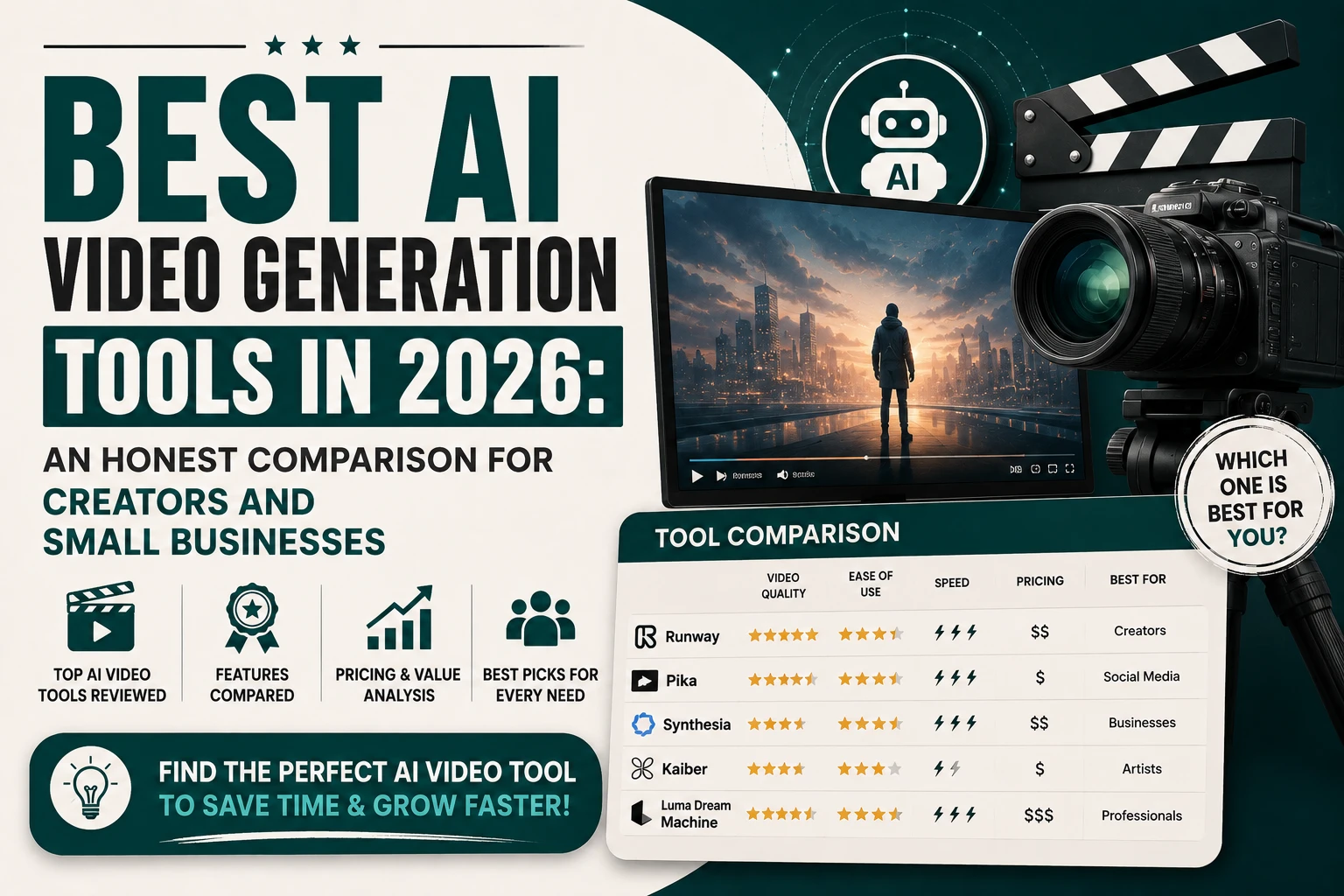
- Cinematic text-to-video generators (Sora, Veo, Runway, Kling) — built for motion quality, shot control, and generating entirely new footage from a prompt.
- Avatar and talking-head tools (Synthesia, HeyGen) — built for training content, sales videos, and explainer content with a consistent presenter and often API access for scaled production.
Very few tools do both well, so the right choice depends entirely on what you’re actually making.
What’s Genuinely New in 2026 (Not Just Marketing)
Native audio is now standard, not a differentiator. Most top-ranked tools in 2026 comparisons now generate synchronized dialogue, ambient sound, and effects natively — Runway is one of the few holdouts still relying more heavily on separate audio production. This alone has cut a lot of post-production work out of the pipeline.
Character consistency has become table stakes. A year ago, keeping the same character, product, or environment stable across multiple generated scenes was a headline feature worth advertising. In 2026, it’s simply expected for any tool being used for real brand or episodic content — without it, every clip feels disconnected from the last, and campaigns lose the cumulative brand effect that comes from visual continuity.
Rendering speed has improved substantially. Some newer models can now produce a 10-second clip in under 7 seconds of render time, a meaningful jump from the multi-minute waits common just a year or two ago — genuinely changing how iterative the creative process can be.
Long-form consistency is the new frontier. Where 2025’s tools struggled to hold a consistent character or scene past 90 seconds, some 2026 autonomous video agents can now sustain coherence across videos running several minutes long — a real unlock for episodic and training content specifically.
A Practical Breakdown by Use Case
For cinematic quality and professional editing control: <a href=”https://sora.com” target=”_blank” rel=”noopener noreferrer”>OpenAI’s Sora</a> and <a href=”https://deepmind.google/technologies/veo/” target=”_blank” rel=”noopener noreferrer”>Google’s Veo</a> remain the reference points most creators compare everything else against.
For fast social content and quick turnarounds: Tools like CapCut have leaned hard into speed, with AI editing features that can cut manual editing time significantly — a strong fit for creators and marketers who need daily or weekly content rather than a single polished piece.
For music and beat-synced video: A newer wave of specialized tools now automatically sync visuals to music beats and lyrics with high accuracy — genuinely useful if short-form music or lyric video content is part of your strategy.
For training, sales, and explainer videos with a consistent presenter: Avatar-based tools remain the better fit over cinematic generators — they solve a completely different problem (a reliable, repeatable presenter) rather than trying to create cinematic motion.
For production-pipeline work (storyboarding, pre-vis, VFX integration): This is increasingly where serious investment is flowing — venture funding into video AI has shifted noticeably toward the production-pipeline layer rather than just the underlying models, a signal that the “boring” tooling around AI video is becoming just as valuable as the generation itself.
If you’re distributing AI-generated video to audiences in the EU, be aware that enforcement of the EU AI Act’s Article 50 began in August 2026, requiring machine-readable marking on AI-generated video shown to EU audiences. This isn’t optional fine print — it’s an active compliance requirement for any business marketing into Europe with AI-generated content.
Pricing is also worth watching closely. Most tools now price by credits or per-second output rather than a flat subscription, which means a plan that looks inexpensive in a demo can get expensive fast once you’re generating at real business volume. Always model your expected monthly output before committing to a plan.
Our Recommendation for Small Businesses and Agencies
Don’t chase the “best” tool in the abstract — match the tool to the job:
- Sales explainer or onboarding video with a talking presenter → avatar tool
- Social media ad or reel → fast, template-driven tool
- Brand film or high-production campaign → cinematic generator + human editing pass
- Ongoing episodic or training content → whichever tool currently handles long-form character consistency best (this changes fast, so re-check before committing to a long series)
FAQs
Can AI-generated video actually replace a professional video production team? For high-volume, lower-stakes content (social posts, quick explainers, testing campaign variations) — largely yes. For flagship brand campaigns and complex storytelling, most teams are using AI to speed up pre-production and drafts, with humans still directing the final creative decisions.
Is AI video generation expensive for a small business? It varies widely by tool and volume, but it’s almost always cheaper than traditional video production for testing multiple creative variations quickly — the real cost risk is underestimating your generation volume against credit-based pricing.
Do I need to disclose that a video was AI-generated? Increasingly, yes, particularly for audiences in the EU under new AI Act requirements, and disclosure norms are trending toward becoming standard practice globally regardless of legal requirement.
AI video tools move fast enough that this landscape will look different again by early next year — but the fundamentals (matching the tool to the job, planning for real usage costs, and staying ahead of disclosure requirements) will still apply. If you want help building out an AI-powered content and video strategy for your brand, get in touch with our team, or check out our guide on creating a month of social content with AI.
Related reading: Building a full web app with Claude Fable 5 · Our SEO services






One comment
[…] AI avatar video is one of the more immediately practical AI tools for business right now — not flashy, but genuinely cost- and time-saving for the training, onboarding, and sales content most companies produce regularly. If you’d like help building out a full video content strategy that mixes AI avatars with your brand’s real personality where it matters most, get in touch with our team, or explore our broader guide to AI video generation tools. […]