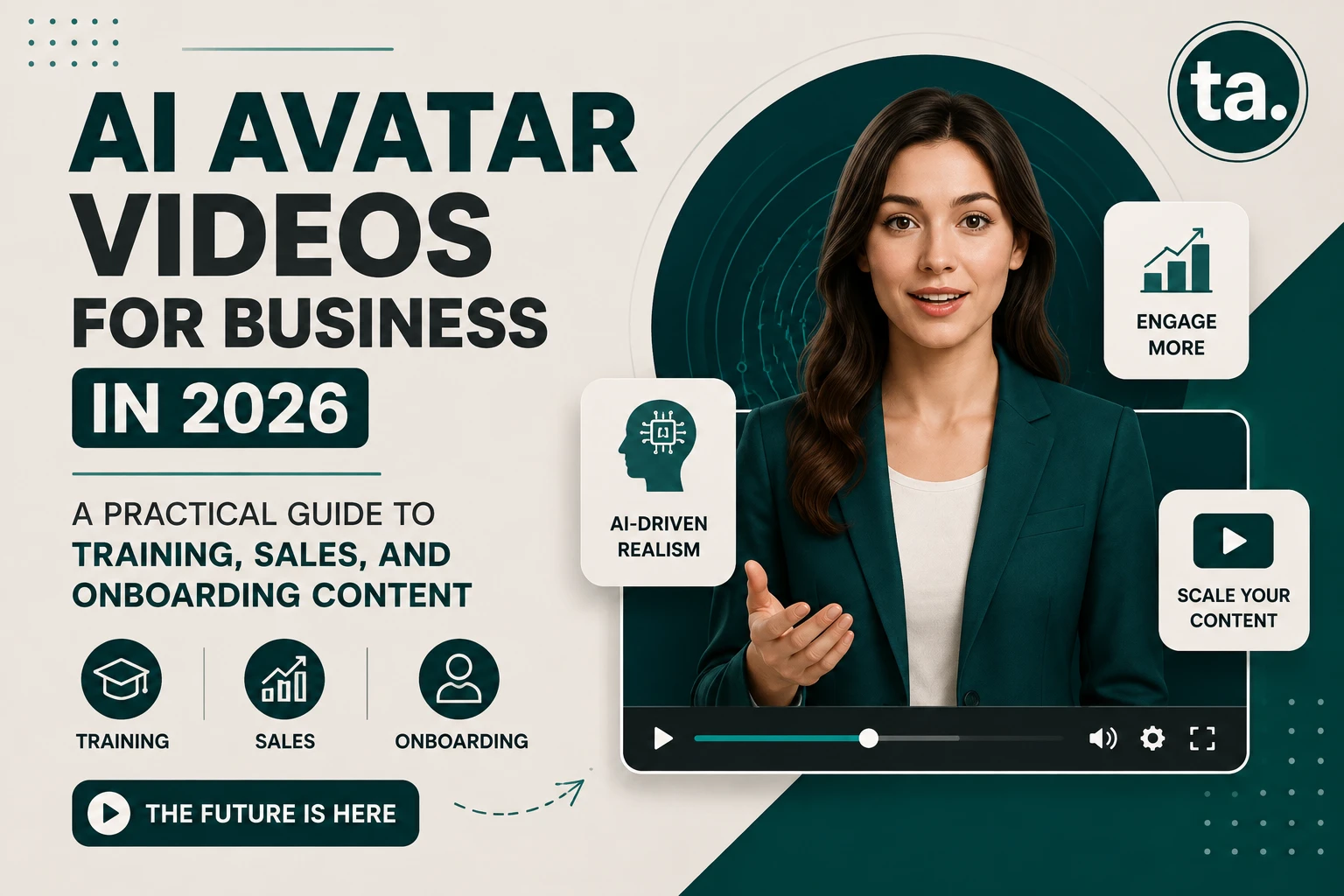
Not every business video needs cinematic quality. A huge share of the video content companies actually need — onboarding modules, product explainers, internal training, sales outreach — just needs a clear, consistent, professional presenter delivering information reliably. That’s exactly the problem AI avatar tools solve, and in 2026 they’ve become genuinely good enough to be a default choice for this kind of content, not just a novelty.
What AI Avatar Tools Actually Do
Unlike cinematic AI video generators (Sora, Veo, Runway) that create entirely new scenes and motion from a text prompt, avatar tools like Synthesia and HeyGen work differently: you type or paste a script, choose a digital presenter (or create a custom one, sometimes based on a real employee with consent), and the tool generates a video of that avatar speaking your script naturally, complete with lip-sync and natural gestures.
This solves a completely different problem than cinematic generation — a reliable, repeatable presenter, not artistic motion or dramatic visuals.
Why Businesses Are Adopting This Fast in 2026
Cost. Producing even a modest training video the traditional way — presenter, camera crew, lighting, editing — easily runs into thousands of rupees or dollars per finished minute. AI avatar tools bring that cost down dramatically, especially for content you’ll need to update frequently.
Speed of updates. Product details, pricing, and policies change. Re-shooting a human presenter every time a script needs a small update is expensive and slow. With an avatar tool, updating a script and regenerating the video takes minutes.
Multi-language scaling. Many avatar platforms can generate the same video in dozens of languages with natural-sounding localized speech, without needing to hire separate presenters or voice actors for each market — genuinely valuable for businesses selling across multiple regions or languages.
Consistency at scale. If you need fifty product explainer videos with a consistent presenter and tone, coordinating that with a human presenter’s schedule is a logistical headache. An avatar is available on demand, indefinitely.
Where AI Avatars Work Best
- Employee onboarding and compliance training — consistent, repeatable content that needs periodic updates as policies change
- Product explainer and how-to videos — especially for SaaS products or services with frequently updated features
- Sales outreach at scale — personalized video messages referencing a prospect’s name or company, generated far faster than recording each one manually
- Internal knowledge-base content — turning written documentation into more engaging video format without pulling a real employee on camera repeatedly
- Localized training and marketing content — the same message delivered naturally in multiple languages
Where AI Avatars Fall Short
Be honest about the limits:
- Brand storytelling and emotional campaigns — avatars still read as clearly synthetic to most viewers, which can undercut authenticity-dependent messaging
- High-stakes trust moments — a founder’s personal message during a crisis, or content meant to build deep personal connection, generally still needs a real human on camera
- Content requiring genuine spontaneity — avatars work from a script; they can’t improvise a natural, unscripted conversation
A Practical Workflow for Getting Started
- Start with your highest-volume, most frequently updated video need — usually onboarding or product explainer content — rather than your flagship brand video.
- Write the script first, and write it to be spoken, not read — shorter sentences, natural pacing, and a clear structure work far better than dense written documentation read aloud.
- Choose or build an avatar that matches your brand tone — a formal corporate look for B2B training content, a more casual style for consumer-facing explainers.
- Add real supporting visuals — screen recordings, product shots, or data visualizations layered alongside the avatar keep the video from feeling static.
- Test with a small internal audience before wide rollout, especially for training content, to confirm clarity and pacing land well.
- Disclose AI usage where relevant, particularly for external-facing content in regions with active AI content labelling requirements.
FAQs
Do employees respond well to AI avatar training videos? Generally yes for procedural and compliance content, where clarity and consistency matter more than personal connection — engagement drops more noticeably when avatars are used for content that genuinely benefits from human warmth, like leadership communications.
Can I create an avatar based on a real employee? Yes, most platforms support this with the employee’s explicit consent, often used so a well-liked trainer or executive’s likeness can “present” updated content without needing to re-record every time.
Is AI avatar video expensive to start with? Most platforms offer accessible entry-level plans suitable for testing with a handful of videos before committing to higher-volume enterprise pricing.
AI avatar video is one of the more immediately practical AI tools for business right now — not flashy, but genuinely cost- and time-saving for the training, onboarding, and sales content most companies produce regularly. If you’d like help building out a full video content strategy that mixes AI avatars with your brand’s real personality where it matters most, get in touch with our team, or explore our broader guide to AI video generation tools.
Related reading: Creating a month of social content with AI · Our SEO services






chat_bubble_outline Leave a Reply