Web Architect & Digital Strategist at Techno Alig. Passionate about building high-performance websites, e-commerce platforms, and data-driven SEO strategies for growing businesses.
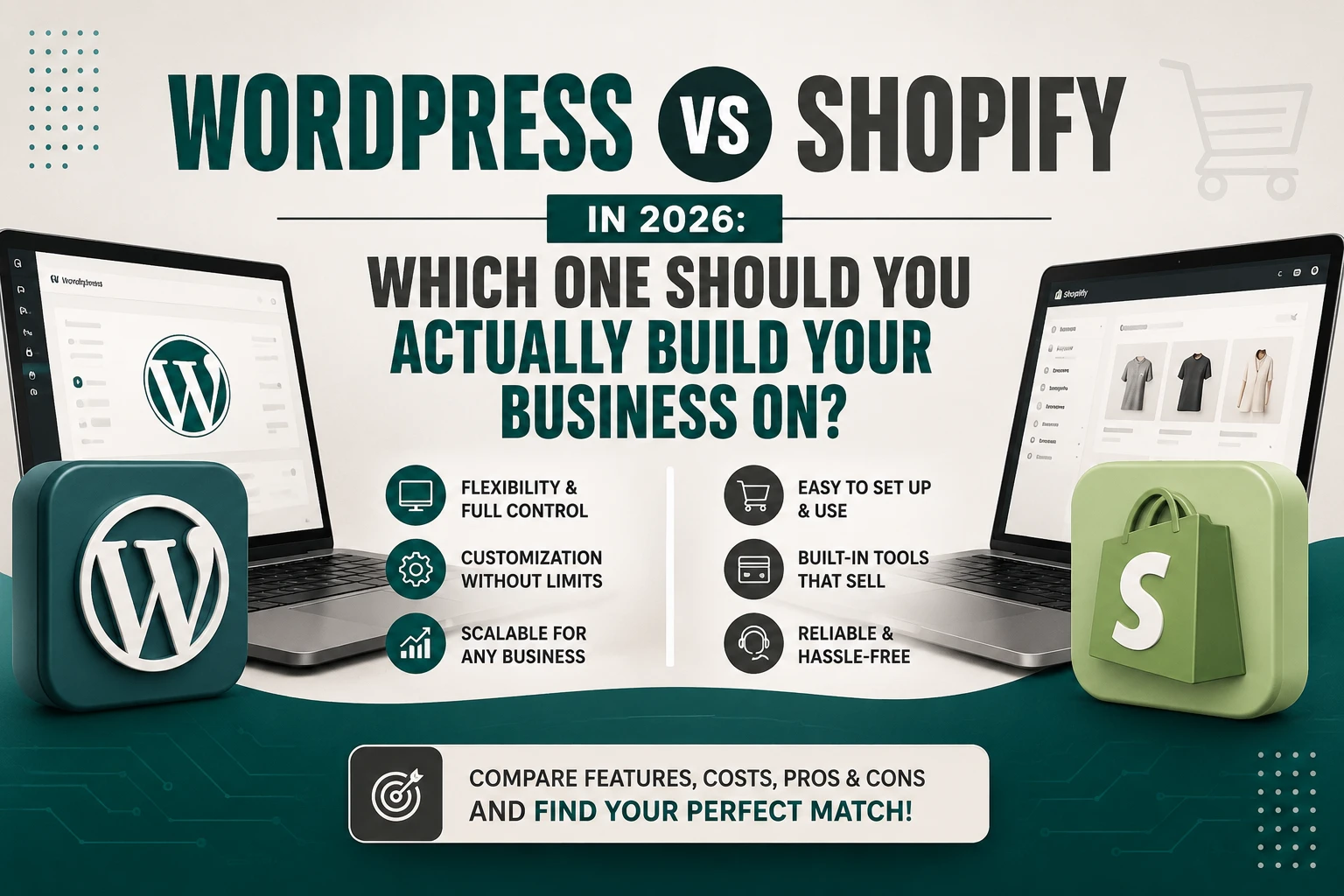
WordPress vs Shopify in 2026: Which One Should You Actually Build Your Business On?
This is the single most common question we get asked before a project even starts: “Should we build on WordPress or Shopify?” And honestly, most articles online answer it badly — either they’re written by a WordPress-only agency that trashes Shopify, or a Shopify partner that pretends WordPress is outdated. It isn’t.
We build on both at Techno Alig, so here’s the comparison without the bias, based on what actually matters for a business in 2026.
The Short Answer
Choose Shopify if you’re primarily selling products online and want the platform managed for you — hosting, security, and updates handled, so you can focus on running the store.
Choose WordPress (with WooCommerce for ecommerce) if you want full control over design, functionality, and content — especially if your site is more than just a store (blog, service pages, portfolio, membership content, bookings, etc.).
Now let’s break down why.
1. Ease of Use
Shopify wins here, clearly. It’s built specifically for selling online, so the dashboard, inventory management, and checkout are all set up out of the box. You can launch a functional store in days.
WordPress has a steeper learning curve, especially with WooCommerce, but it’s also far more flexible once you (or your developer) understand it.
2. Cost
Shopify runs on a monthly subscription (plans currently range roughly from entry-level to advanced tiers — check <a href=”https://www.shopify.com/pricing” target=”_blank” rel=”noopener noreferrer”>Shopify’s official pricing page</a> for current numbers) plus transaction fees on some plans.
WordPress itself is free and open-source (see <a href=”https://wordpress.org” target=”_blank” rel=”noopener noreferrer”>WordPress.org</a>), but you pay for hosting, a theme, and any premium plugins — which can end up cheaper or more expensive than Shopify depending on how much functionality you need.
Rule of thumb: For a simple store with under a few hundred products, Shopify’s all-in-one cost is often more predictable. For a content-heavy or highly custom site, WordPress usually costs less long-term.
3. SEO Capability
Both platforms can rank well in Google — plenty of Shopify stores and WordPress sites sit on page one. But WordPress gives more granular control: custom URL structures, deeper content flexibility (long-form guides, resource hubs, comparison pages), and more SEO plugin options.
Shopify has improved a lot here, but some technical SEO elements (like URL structure for collection pages) are more rigid because of how the platform is built.
If SEO and content marketing are core to your growth strategy, WordPress generally has the edge. If SEO is secondary to just running a clean store, Shopify’s built-in setup is good enough for most businesses.
4. Design Flexibility
WordPress wins on raw flexibility — with page builders and custom development, you can build almost anything. Shopify themes are polished and conversion-optimized out of the box, but customizing beyond the theme’s design system requires more development work (Liquid templating).
5. Scalability
Both scale well. Shopify handles huge traffic spikes gracefully since it’s fully hosted and managed — useful for flash sales or viral moments. WordPress can scale just as far, but it depends on your hosting setup and how well the site is built; a poorly optimized WordPress site will struggle under heavy traffic where Shopify wouldn’t.
6. Maintenance
Shopify: little to no maintenance — Shopify handles security patches, uptime, and platform updates.
WordPress: requires ongoing maintenance — plugin updates, security monitoring, backups. This is exactly why most WordPress agencies (including us) offer maintenance packages, because an unmaintained WordPress site becomes a security risk over time.
Quick Comparison Table
Factor
WordPress + WooCommerce
Shopify
Best for
Content sites, service businesses, custom stores
Pure ecommerce, product-first brands
Setup speed
Slower
Fast
Ongoing maintenance
You manage it (or your agency does)
Handled by Shopify
Design flexibility
Very high
Good, but theme-constrained
SEO control
Very high
Good
Typical cost pattern
Variable, can be lower long-term
Predictable monthly subscription
Our Honest Recommendation
If more than 80% of your business is selling physical products online and you want to move fast with minimal technical overhead — go Shopify.
If your business needs a website that does more than sell (services, blog, bookings, resources, lead generation) or you want maximum long-term SEO control — go WordPress.
Some of our clients actually run both: a WordPress site for content and brand, linking out to a Shopify store for transactions. There’s no rule that says you have to pick just one.
FAQs
Can WordPress sites sell products as well as Shopify? Yes, through WooCommerce — <a href=”https://woocommerce.com” target=”_blank” rel=”noopener noreferrer”>WooCommerce.com</a> powers a large share of ecommerce sites globally and offers most of the same core functionality as Shopify, with more customization.
Which platform is cheaper for a small business in India? It depends on scale. For under 50 products with simple needs, either works. WordPress tends to be cheaper as complexity grows, since you’re not locked into recurring per-feature app costs.
Can I switch from Shopify to WordPress later, or vice versa? Yes, migrations are possible in both directions, though they take planning to preserve SEO rankings and product data properly.
Not sure which platform fits your business? We build on both, so we’ll give you an honest recommendation, not a sales pitch for whichever platform we happen to specialize in. Get a free consultation, or explore our WordPress and Shopify development services directly.
If you’re looking for a reliable Web Developer in Aligarh, look no further than Techno Alig. Contact us today to discuss your project and take the first step towards establishing a powerful online presence.






chat_bubble_outline Leave a Reply