A year ago, “which AI image generator is best” had a fairly simple answer. In 2026, it doesn’t — the market has split into clear use-case winners rather than one universal champion, and picking the wrong one for your specific job wastes both time and money. Here’s an honest, practical breakdown.
The Short Answer
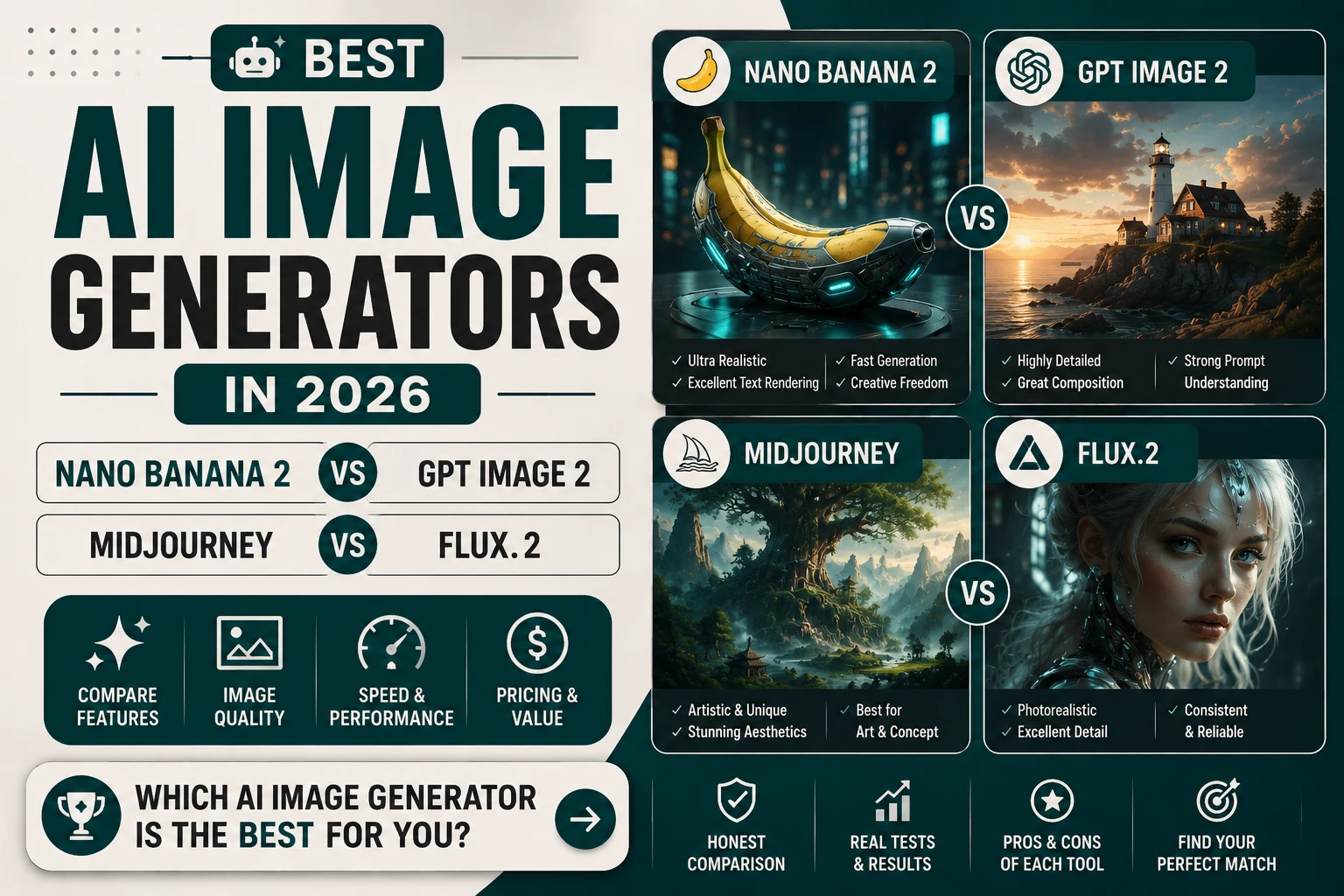
- Best overall for most teams: GPT Image 2 — tops the major image-generation leaderboards for prompt adherence and text rendering, meaning it does the best job of actually following complex instructions and rendering legible text inside images.
- Best for image editing and studio-quality output: Nano Banana Pro (Gemini 3 Pro Image) — leads the editing-specific benchmarks and offers strong creative control.
- Best for high-volume, cheap general work: Nano Banana 2 — Google’s faster, cheaper sibling model, priced at roughly 7 cents per image, undercutting most competitors by a wide margin while still delivering near-Pro quality.
- Best for concept art and stylized campaigns: Midjourney V8 — still the go-to for artists and art directors who want a distinctive visual style rather than photorealism.
- Best for developers needing an API: FLUX.2 Pro — the preferred choice for photoreal product shots and high-volume marketing imagery integrated directly into software workflows.
Why Google’s Nano Banana Line Matters So Much Right Now
Google’s Nano Banana model went viral after its original 2025 launch, particularly in India, and the follow-up releases have kept pushing the category forward. Nano Banana 2 specifically closed a gap that used to force a hard choice between quality and affordability — it delivers image quality close to the Pro tier at roughly half the cost and significantly faster generation speed, supporting resolutions from 512px up to full 4K. It’s now the default image generator across Google’s Gemini app and broader tool ecosystem.
For small businesses generating a high volume of marketing images — product mockups, social posts, ad variations — this cost-to-quality ratio is genuinely significant. Where a year ago you might have had to ration your AI image generation budget carefully, tools like Nano Banana 2 make near-unlimited iteration realistic even on a modest budget.
What Actually Changed in the Last Year
Prompt adherence has improved dramatically. Getting an AI image generator to follow a detailed, multi-element brief precisely (specific colors, exact text, particular composition) used to require heavy trial and error. Leading 2026 models now handle detailed, layered instructions in a single pass far more reliably.
Text rendering inside images finally works. For years, AI-generated images with legible text (posters, signage, product labels) were a running joke in the industry. Current-generation models render clean, accurate typography directly inside generated images — a genuinely useful unlock for marketing and design work.
Conversational editing has replaced rigid prompt syntax. Instead of learning specific prompt formatting conventions, most leading tools now let you describe what you want in plain language and refine the result through natural back-and-forth conversation, similar to chatting with an assistant.
Cultural and contextual awareness has improved. Prompts referencing specific regions, seasons, or cultural contexts now produce noticeably more authentic, less generic results than earlier model generations.
A Practical Breakdown by Use Case
Marketing and social media content at volume: Nano Banana 2 or FLUX.2 Pro — both prioritize cost-efficiency at scale.
Brand identity, logos, and stylized visual campaigns: Midjourney remains the strongest choice when a distinctive artistic style matters more than photorealism.
Product photography and ecommerce imagery: FLUX.2 Pro’s photoreal output and API-first design make it the natural fit for teams generating large volumes of product shots programmatically.
Presentation graphics, mockups, and general business use: GPT Image 2’s strong prompt-following and text rendering make it the most reliable all-round choice for non-designers producing professional-looking assets.
Detailed photo editing and refinement: Nano Banana Pro leads specifically on editing-focused benchmarks, useful when you’re refining an existing image rather than generating from scratch.
A Word of Caution on the Fast-Moving Landscape
This category is moving fast enough that tools get deprecated with little warning — Google’s earlier Imagen 4 model, for instance, was fully deprecated in mid-August 2026. If you’re building a business workflow around any of these tools, avoid hard-coding a single model into critical processes without a fallback plan, and revisit your toolset every few months rather than assuming today’s best pick stays best indefinitely.
FAQs
Can AI-generated images be used commercially? Generally yes, though usage rights vary by platform and plan tier — always check the specific commercial license terms of whichever tool you’re using before using outputs in paid campaigns or products for sale.
Is Midjourney still worth it if Nano Banana and GPT Image are cheaper? Yes, if your work depends on a distinctive artistic style rather than photorealistic accuracy — Midjourney’s aesthetic remains difficult to fully replicate elsewhere.
Do I need design skills to use these tools effectively? Basic skills help with refining composition and knowing what to ask for, but the shift toward conversational, plain-language editing has made these tools far more accessible to non-designers than earlier prompt-syntax-heavy versions.
Choosing the right AI image tool can save your business real time and money — but knowing how to actually brief and use these tools well for consistent brand output is where most of the value gets lost. If you’d like help building a cohesive AI-powered visual content workflow, get in touch with our team, or check our guide on creating a brand identity with AI and our custom design services.
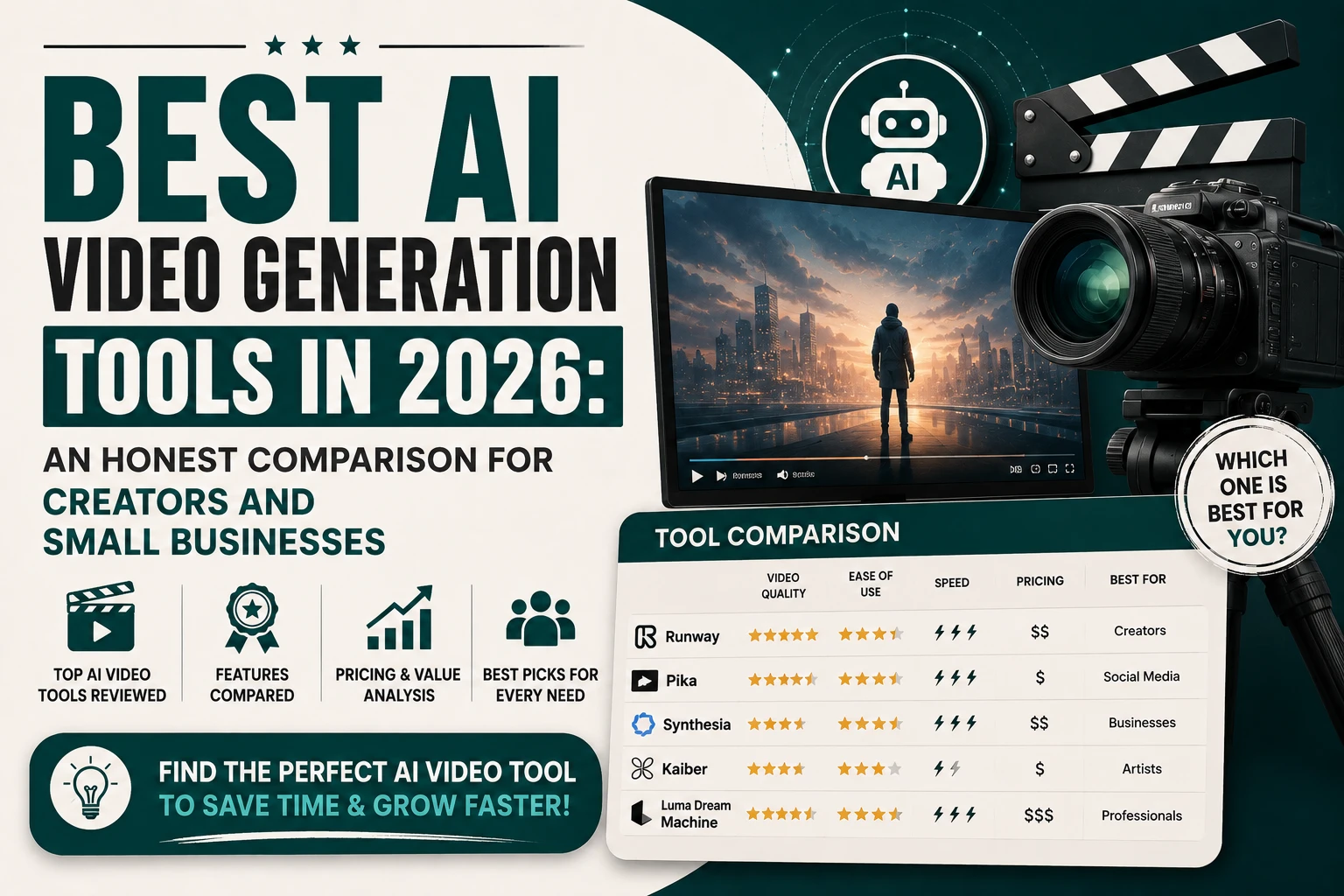
Related reading: Best AI video generation tools 2026



chat_bubble_outline Leave a Reply