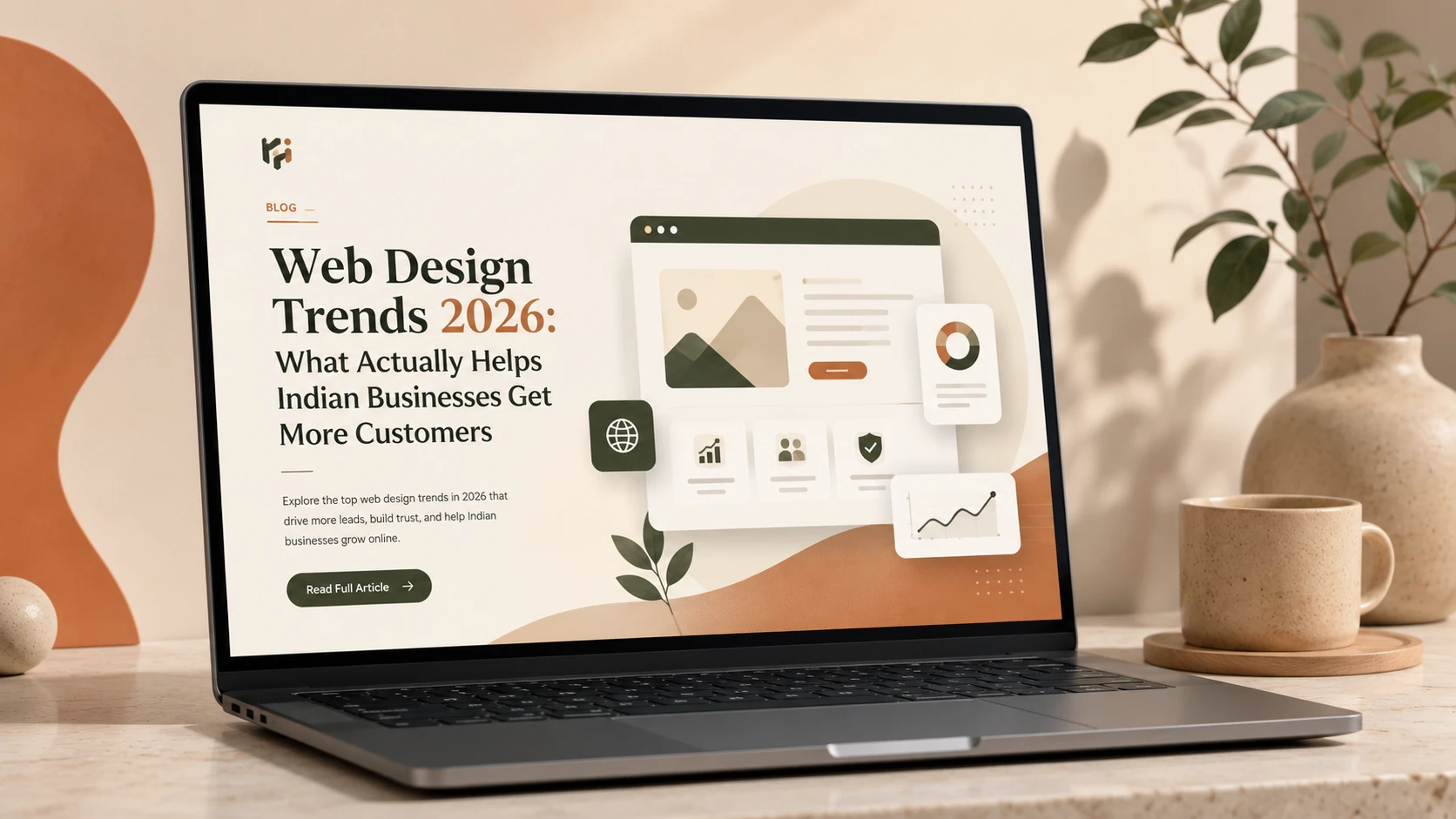
Every January, somebody publishes a list of “web design trends” and half of it is stuff only a Silicon Valley SaaS startup with a six-figure design budget could pull off. If you run a clinic in Aligarh, a coaching institute in Lucknow, or an ecommerce store shipping across India, you don’t need a website that wins design awards — you need one that loads fast, looks credible, and turns visitors into calls or orders.
So here’s a more honest look at what’s actually trending in web design in 2026, and — more importantly — which trends are worth your money and which ones you should quietly ignore.
1. AI-Personalised Homepages (Worth It — With Limits)
In 2026, more websites are adjusting their homepage messaging based on who’s visiting — a first-time visitor from a Google search sees different copy than someone who clicked a WhatsApp ad. This isn’t science fiction anymore; it’s a fairly standard setup on WordPress and Shopify sites using conditional content blocks.
Should you do this? If you run paid ads or get traffic from multiple sources (organic, social, referral), yes — even a simple version (different hero banners for different traffic sources) can meaningfully lift conversions. If you’re a small local business with one steady traffic source, this is optional.
2. “Tactile” and Bold Typography Over Stock Photos
Big, expressive headline text is replacing generic stock photography as the visual centrepiece of homepages. Instead of a smiling stock-photo model, you’ll see a giant, confident headline stating exactly what the business does, sometimes with subtle scroll animation.
This trend is genuinely useful for small businesses because it’s cheaper to execute than custom photography or 3D renders, and it forces clearer messaging — which usually helps conversions more than pretty visuals do anyway.
3. Organic Shapes and Warmer Colour Palettes
After years of sharp grids and flat corporate blue, 2026 design is softening — rounded edges, warm gradients, and more “human” colour choices. This works especially well for healthcare, education, wellness, and hospitality brands that want to feel approachable rather than corporate.
This is the trend that matters most and gets talked about the least. As AI crawlers and AI-generated search summaries (like Google’s AI Overviews) become a bigger source of traffic, sites are being built leaner — less bloated JavaScript, faster load times, and cleaner code — so both humans and bots can read them properly. Google’s own guidance on <a href=”https://web.dev/articles/vitals” target=”_blank” rel=”noopener noreferrer”>Core Web Vitals</a> makes clear that speed and stability directly affect both rankings and user experience.
If you only adopt one trend from this list, make it this one. A beautiful website that takes 6 seconds to load on a mobile network in Tier 2/3 India is losing you customers before they even see the design.
5. Micro-Interactions Instead of Heavy Animation
Instead of flashy full-page animations, 2026 design favours small, purposeful interactions — a button that gently responds when tapped, a form field that confirms input in real time. These add polish without hurting load speed, unlike the heavy video backgrounds that were popular a few years ago.
6. Accessibility Is No Longer Optional
More businesses are being asked (sometimes by clients, sometimes by law) to meet basic accessibility standards — readable contrast, proper alt text, keyboard navigation. The <a href=”https://www.w3.org/WAI/standards-guidelines/wcag/” target=”_blank” rel=”noopener noreferrer”>W3C’s WCAG guidelines</a> are the reference point most agencies design against, and it’s a trend that’s only going to grow.
What Indian Small Businesses Should Actually Prioritise in 2026
If your budget is limited, here’s the order we’d recommend at Techno Alig:
- Mobile speed and Core Web Vitals — non-negotiable, affects both users and Google rankings.
- Clear, bold messaging over decorative visuals.
- A mobile-first layout, since most Indian traffic is on phones, not desktops.
- Basic accessibility — proper contrast and alt text cost nothing extra during development.
- Trendy animation and 3D effects — nice to have, last on the list.
FAQs
Do web design trends actually affect SEO? Indirectly, yes. Trends around speed, mobile-friendliness, and clean code overlap heavily with what Google rewards in rankings. Purely decorative trends (colour, typography style) don’t affect SEO directly.
How often should a business redesign its website? Roughly every 2–3 years, or sooner if your site is slow, not mobile-friendly, or your conversion rate has been falling.
Is AI web design replacing web designers? No — AI tools speed up drafts and layout ideas, but strategy, brand judgement, and conversion-focused design still need a human who understands your business and your customers.
Trends come and go, but a website that’s fast, clear, and built around what your customers actually need to see will always outperform one that’s just chasing the latest look. If you want a website redesign that’s built on 2026’s genuinely useful trends — not the gimmicks — talk to our team about a free website audit, or browse our custom design services.




chat_bubble_outline Leave a Reply