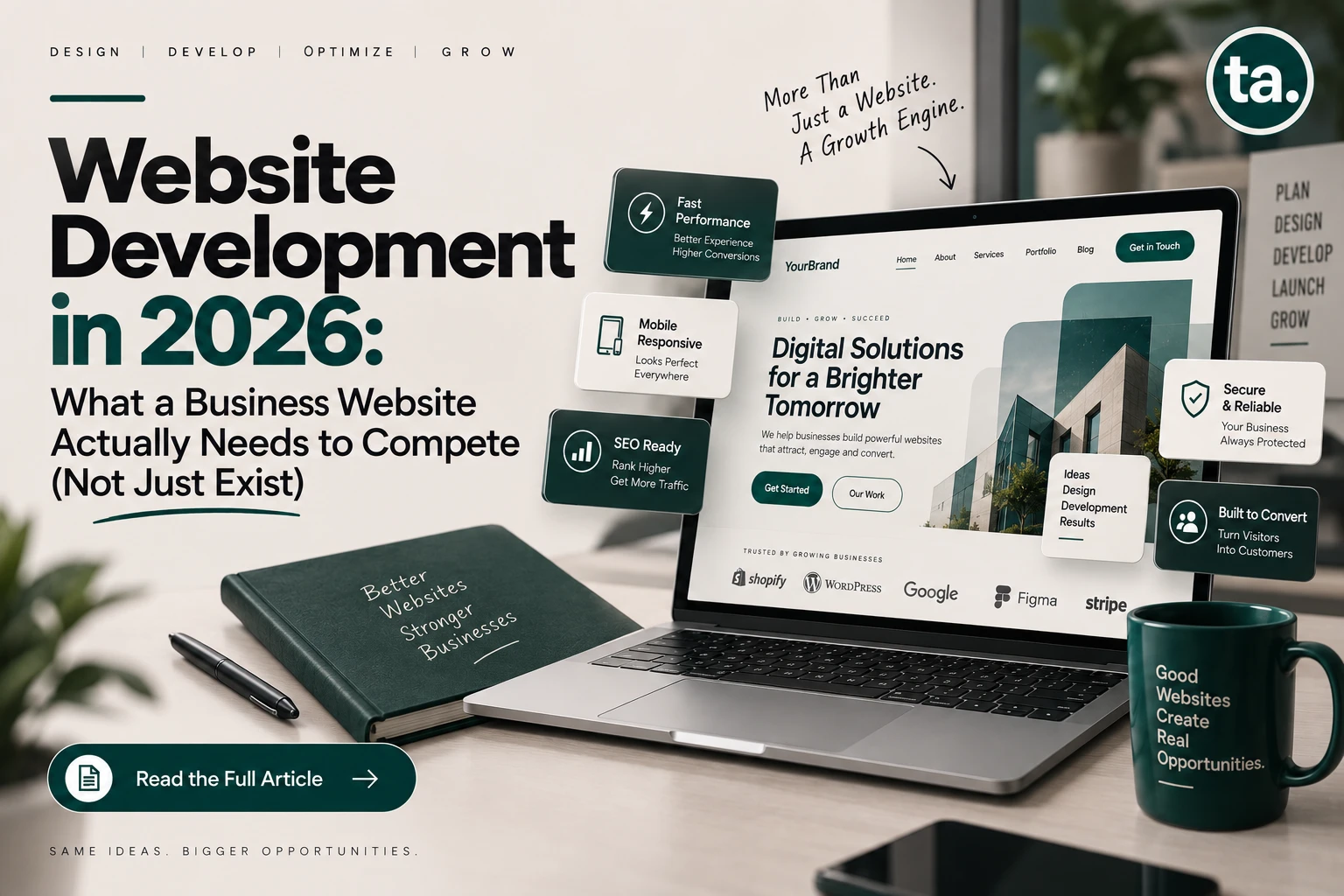
Most businesses already have a website. Very few of them have a website that’s actually working for them. There’s a meaningful difference between a site that exists — technically online, technically showing your services — and one that’s genuinely built to bring in inquiries, build trust, and hold up under real traffic. In 2026, that gap has only widened, because the baseline expectation for “a good website” has quietly gotten much higher.
Here’s what actually separates the two, based on what we consistently see when auditing existing business websites before a rebuild.
The Foundation: Speed and Technical Health Come Before Design
It’s tempting to start a website project by talking about colors and layout. But the sites that genuinely perform well start with technical fundamentals — because a beautiful site that loads slowly or breaks on mobile loses visitors before the design even gets a chance to matter.
This means:
- Fast load times, measured against Google’s Core Web Vitals, not just “feels okay on my computer”
- A mobile-first build, not a desktop site awkwardly squeezed to fit smaller screens
- Clean, semantic code that search engines and AI systems can actually parse and understand
- Reliable hosting that doesn’t buckle under a traffic spike from a successful campaign
Skipping straight to visual design without this foundation is the single most common reason a redesign fails to move the needle on actual business results, even when it looks noticeably better.
Clarity Beats Cleverness
Visitors decide within seconds whether a website is worth their attention, and in that window, clarity wins over cleverness every time. A homepage that immediately answers three questions — what does this business do, who is it for, and what should I do next — consistently outperforms one built around abstract branding language or an elaborate visual concept that takes a moment to decode.
This doesn’t mean the site has to look plain. It means every design decision should serve comprehension first, aesthetics second — the two aren’t actually in conflict when done well, but when they are in tension, comprehension should win.
Content Has to Be Genuinely Useful, Not Just Present
Google’s own guidance on what it considers “helpful content” has become increasingly explicit: content built primarily to attract search traffic, without genuinely serving the reader, underperforms content written to actually answer a real question a real visitor has. This applies just as much to a service page as it does to a blog post.
A generic “About Us” page that could belong to any company in your industry does very little. A services page that clearly explains what’s included, how the process works, and what outcomes to expect does a lot — both for visitors deciding whether to reach out, and for search engines trying to understand what your page is actually about.
Accessibility Is a Requirement, Not an Extra
An increasing number of clients, government bodies, and industries are treating accessibility (proper contrast, readable text sizes, keyboard navigation, alt text on images) as a baseline requirement rather than a nice-to-have. Beyond compliance, it’s simply good practice — a meaningful share of any audience benefits from accessible design, whether due to a permanent disability, a temporary limitation, or just poor lighting and a small phone screen.
The Platform Choice Matters Less Than the Build Quality
One of the most common questions in any website project is which platform to build on — WordPress, Shopify, or something custom. The honest answer is that platform choice matters far less than most people assume; a well-built WordPress site will consistently outperform a poorly built custom build, and vice versa. What matters more is matching the platform to the actual business need: content-heavy and highly flexible sites tend to suit WordPress, product-first ecommerce tends to suit Shopify, and highly specific functional requirements sometimes genuinely warrant custom development.
Conversion Paths Need to Be Designed, Not Assumed
A website with excellent content and fast load times can still fail to generate leads if it’s not actually guiding visitors toward action. This means clear, consistently placed calls to action, minimal friction in contact forms, and genuinely easy ways to reach out — a phone number that’s actually clickable on mobile, a form that doesn’t demand ten fields before someone can ask a simple question.
Analysing where visitors currently drop off — using basic analytics rather than guesswork — usually reveals more actionable insight than any amount of visual polish would.
What “Future-Proof” Actually Means for 2026–2027
A genuinely future-proof website in this period means a few specific things:
- Built to be legible to AI systems, not just traditional search crawlers, since a growing share of discovery now happens through AI-generated answers that cite source websites
- Structured with clean, well-organized content that can be easily updated and expanded, rather than a rigid, hard-to-edit build that becomes a liability within a year
- Genuinely fast and stable under real-world mobile network conditions, not just a fast connection in a testing environment
- Built with a maintenance plan in mind from day one, since an unmaintained website — regardless of how well it was built initially — degrades in both security and performance over time
A Practical Website Health Checklist
- Loads in under 2.5 seconds on mobile (Largest Contentful Paint)
- Homepage clearly states what you do, for whom, in the first screen
- Every core service or product has its own genuinely useful, detailed page
- Contact information and calls to action are visible without scrolling
- Site passes basic accessibility checks (contrast, alt text, keyboard navigation)
- Analytics are actually set up and reviewed, not just installed and forgotten
- A maintenance plan exists for updates, backups, and security monitoring
FAQs
How often should a business website be redesigned? Roughly every 2–3 years for most businesses, or sooner if load speed, mobile usability, or conversion rates have clearly declined.
Does a website really need to be custom-built to perform well? No — a well-executed build on an established platform like WordPress or Shopify performs just as well as custom development for the vast majority of business needs; custom development earns its cost when requirements genuinely can’t be met otherwise.
What’s the biggest mistake businesses make with their website? Treating it as a one-time project rather than an ongoing asset — publishing it and never revisiting speed, content accuracy, or conversion performance again.
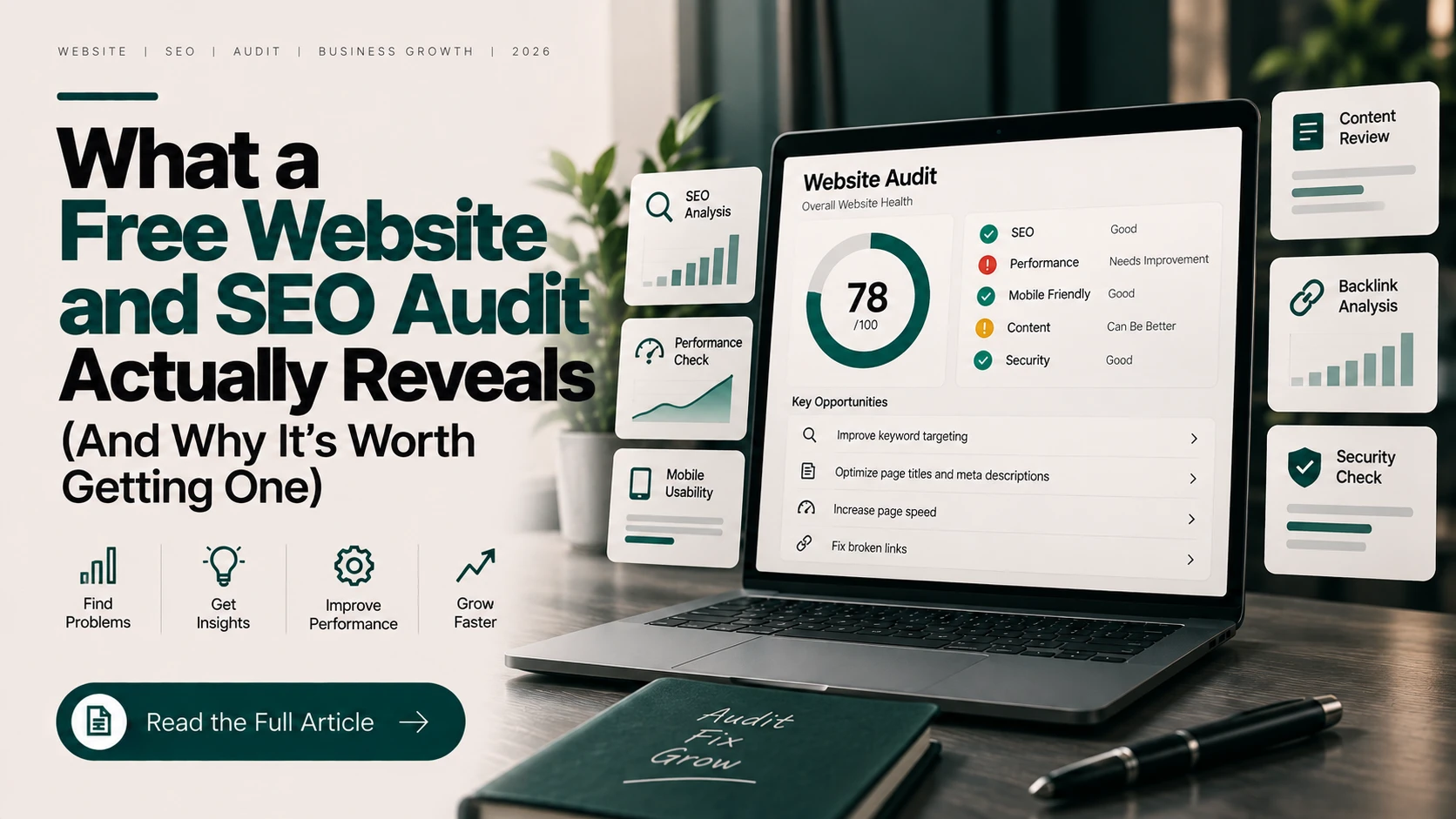
A website is one of the few business assets that works around the clock, but only if it’s actually built with that job in mind rather than treated as a digital business card. If you’d like a full audit of where your current site stands against these fundamentals, get in touch with our team — or explore our website design, WordPress, and Shopify development work.
Related reading: Website speed and Core Web Vitals guide




2 Comments
[…] security review of your current website, get in touch with our team, or read our related guides on website development fundamentals and WordPress […]
[…] your current hosting setup and site efficiency, get in touch with our team, or read our guides on website development fundamentals and Core Web Vitals and site […]