Loading Article Title...

🍪 We use cookies to make sure you get the sweetest experience on our website — smooth, secure, and perfectly tailored just for you! 💫✨
Web Architect & Digital Strategist at Techno Alig. Passionate about building high-performance websites, e-commerce platforms, and data-driven SEO strategies for growing businesses.
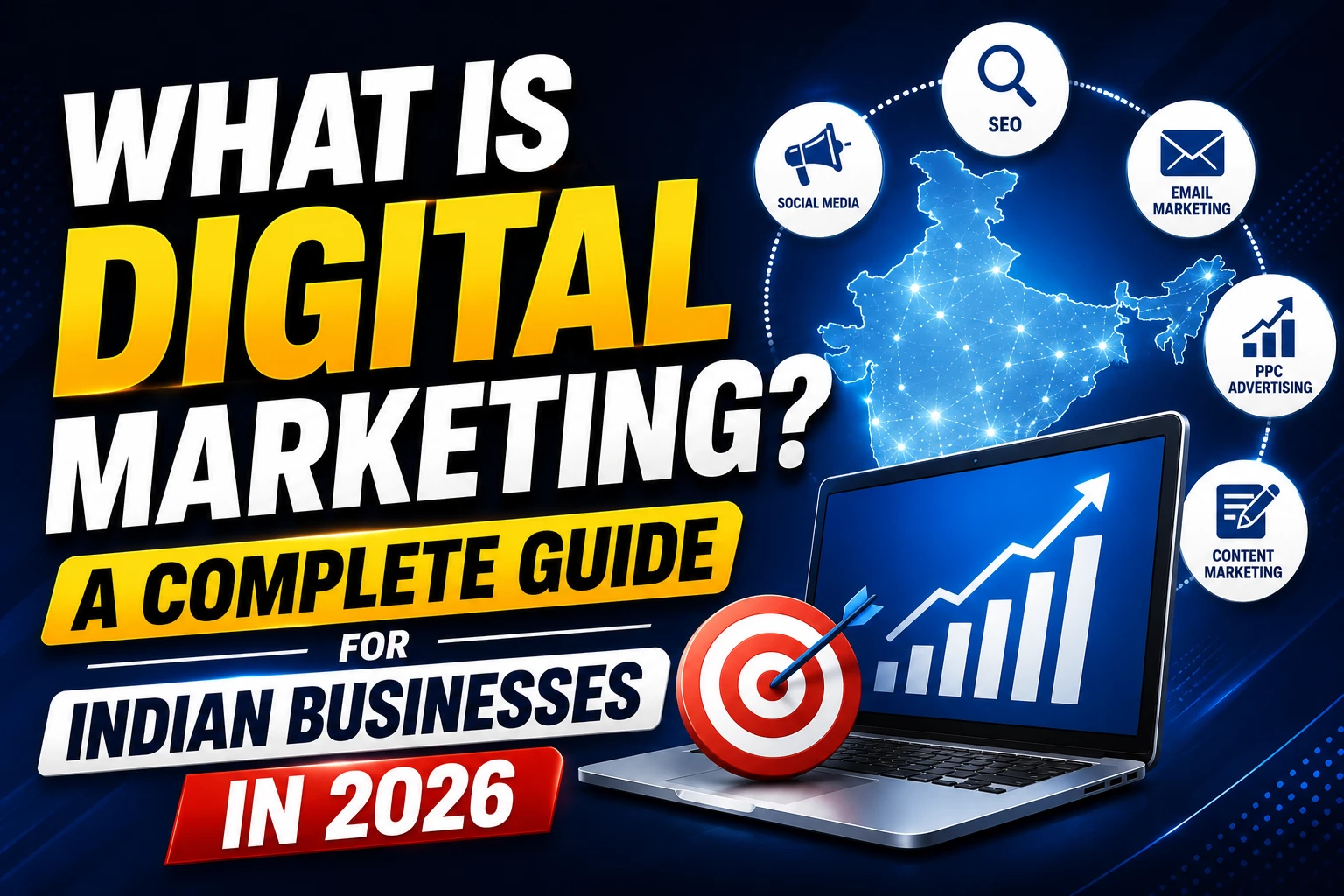
Digital marketing is the promotion of products, services, or brands through digital channels — including search engines, social media platforms, email, and websites — to reach and engage target audiences online.
India’s digital advertising market reached ₹62,000 crore in 2026, growing at 25% per year (Source: Dentsu Digital Report). Over 900 million Indians now use the internet, and that number is still rising. For any business that wants to grow in this environment, digital marketing isn’t optional — it’s the channel where your customers are spending most of their time.
This guide explains every component of digital marketing in plain language, with India-specific context throughout.
Digital marketing refers to all marketing activities that happen through electronic devices and the internet. It encompasses a broad range of channels and tactics, each suited to different business goals and audiences.
The term covers everything from a small business appearing in Google’s local search results to a national brand running a multi-crore video campaign across YouTube and Instagram. What makes it “digital” is that it occurs on internet-connected platforms — and, crucially, that it’s measurable in ways that traditional advertising (print, television, hoardings) is not.
When a business runs a Google Search Ad, it can see exactly how many people searched, how many clicked, how much each click cost, and how many of those clicks became enquiries or sales. That level of precision is what distinguishes digital marketing from every form of marketing that came before it.
SEO is the process of improving a website so that it appears higher in Google search results for relevant queries — without paying for those positions. It involves optimising website content, technical structure, and off-site authority signals (links from other websites) to signal relevance and trustworthiness to search engine algorithms.
For Indian businesses, SEO is particularly powerful because local search competition in Tier-2 cities remains relatively low compared to Western markets. A well-optimised business in Aligarh, Agra, or Kanpur can realistically reach Google’s first page for high-intent local search terms within 3–6 months — generating consistent enquiries without ongoing advertising spend.
SEO is a long-term investment. Results build over time and, unlike paid advertising, continue delivering returns after the active work stops.
Best for: Businesses with a 6–12 month time horizon, consistent content creation capacity, and a desire to reduce long-term dependence on paid advertising.
Social media marketing refers to using platforms like Instagram, Facebook, LinkedIn, YouTube, and WhatsApp to build brand awareness, engage with customers, and drive traffic to a business’s website or physical location.
In India, social media usage is dominated by Instagram (490 million+ users) and YouTube (500 million+ users), followed by Facebook and WhatsApp. For most Indian consumer businesses, Instagram and YouTube are the highest-reach platforms. LinkedIn is the most effective platform for B2B businesses targeting professionals.
Social media marketing divides into two approaches: organic (creating and posting content without paid promotion) and paid (boosting posts or running targeted ad campaigns to reach users outside your existing audience).
Best for: Businesses selling to consumers, restaurants, retailers, fashion, fitness, beauty, hospitality, and any brand where visual content is a natural fit.
Pay-per-click advertising, commonly called PPC, refers to paid search advertising where businesses bid to appear at the top of Google search results for specific keywords and pay only when a user clicks their ad.
Google Ads is the dominant PPC platform. When someone in Delhi searches “emergency electrician near me,” the businesses appearing at the top (marked “Sponsored”) are paying for that placement. The cost per click in India ranges from ₹5 to ₹200+ depending on the keyword competitiveness and industry.
PPC is the fastest way to generate website traffic and enquiries — campaigns can go live within 24 hours. The trade-off is that traffic stops the moment you stop paying. This makes PPC ideal for immediate lead generation while longer-term channels like SEO build up.
Best for: Service businesses with high-value customers (legal, medical, financial), seasonal campaigns, new businesses needing immediate leads, ecommerce product promotion.
Social media advertising refers to paid campaigns run through Meta Ads Manager to display ads on Facebook and Instagram. Unlike Google Ads (which targets people actively searching), Meta Ads target people based on demographics, interests, and behaviour — reaching potential customers before they’ve started searching.
Meta Ads are particularly effective for building brand awareness, retargeting website visitors who didn’t convert, and selling products directly through Instagram Shopping. For Indian businesses, Meta Ads offer some of the lowest cost-per-impression rates globally, making them highly efficient for brand-building campaigns at modest budgets.
A typical Indian small business can run effective brand awareness campaigns for ₹500–₹2,000 per day and reach tens of thousands of targeted users in their city or region.
Best for: Consumer brands, ecommerce, event promotion, retargeting campaigns, businesses building awareness rather than capturing immediate search demand.
Content marketing refers to creating and distributing valuable, relevant content — blog posts, videos, guides, case studies, podcasts — to attract and retain a clearly defined audience, with the goal of eventually converting that audience into customers.
Content marketing works because it builds trust before the sales conversation begins. A business that publishes a genuinely useful guide to “how to choose an accountant in Lucknow” earns credibility with potential clients in that market — and when those readers need accounting services, they already trust the source.
In India, content marketing is underutilised by most SMEs, which means the opportunity to stand out through quality content is higher than in more saturated markets.
Best for: Professional services, B2B companies, agencies, any business where the purchase decision involves research and trust-building.
Email marketing refers to sending targeted messages directly to a list of subscribers — potential customers, existing customers, or both — to build relationships, share news, promote offers, and drive repeat business.
Email consistently delivers the highest return on investment of any digital marketing channel globally. For Indian businesses, email is particularly powerful for customer retention — sending monthly newsletters, new product announcements, and personalised offers to existing customers who are statistically far more likely to purchase again than new visitors.
The foundation of effective email marketing is building a quality list. Every business should collect email addresses from customers at every touchpoint — website forms, in-store, post-purchase — and begin a simple monthly newsletter before investing in more complex automation.
Best for: Ecommerce businesses, subscription services, professional firms with repeat clients, any business with an existing customer base.
Analytics refers to collecting, measuring, and interpreting data about digital marketing performance to inform better decisions. Google Analytics 4, Google Search Console, and platform-specific dashboards (Meta Ads Manager, Google Ads reporting) are the primary tools.
Without analytics, digital marketing is guesswork. With analytics, you know exactly which channels are bringing customers, what content they engage with, where they drop off, and what the actual return on each rupee spent is.
Every Techno Alig project includes Google Analytics 4 and Search Console setup as standard — because a website without measurement is a business flying blind.
| Channel | Cost Model | Time to Results | Best Goal |
| SEO | Monthly retainer | 3–12 months | Long-term organic leads |
| Google Ads (PPC) | Pay per click | 24–72 hours | Immediate leads |
| Meta Ads | Pay per impression/click | 24–48 hours | Awareness + retargeting |
| Social Media (organic) | Time investment | 3–6 months | Brand trust + engagement |
| Content Marketing | Time + writing cost | 3–9 months | Authority + SEO |
| Email Marketing | Low (tool cost) | Immediate | Customer retention |
Techno Alig is a full-service digital marketing agency operating from Aligarh, India and Dublin, Ireland. Our digital marketing services cover SEO, Google Ads, Meta Ads, social media management, content creation, and email marketing.
We start with a free consultation to understand your business goals — and then recommend the specific combination of channels that makes sense for your budget, your industry, and your timeline. We don’t sell packages that don’t fit your situation.
Book a free digital marketing consultation →
What is digital marketing in simple words? Digital marketing is promoting your business online — through Google, social media, email, and your website — to reach customers where they already spend their time. It includes SEO, paid advertising, social media management, content creation, and email campaigns.
What are the main types of digital marketing? The seven main types of digital marketing are: Search Engine Optimisation (SEO), Pay-Per-Click advertising (PPC/Google Ads), Social Media Marketing, Social Media Advertising (Meta Ads), Content Marketing, Email Marketing, and Analytics. Most businesses use a combination of these channels.
Is digital marketing effective for small businesses in India? Yes. Digital marketing is particularly effective for Indian small businesses because: online competition in most Tier-2 and Tier-3 cities is still relatively low, ad costs on Google and Meta are lower in India than Western markets, and India has 900+ million internet users actively searching for local products and services.
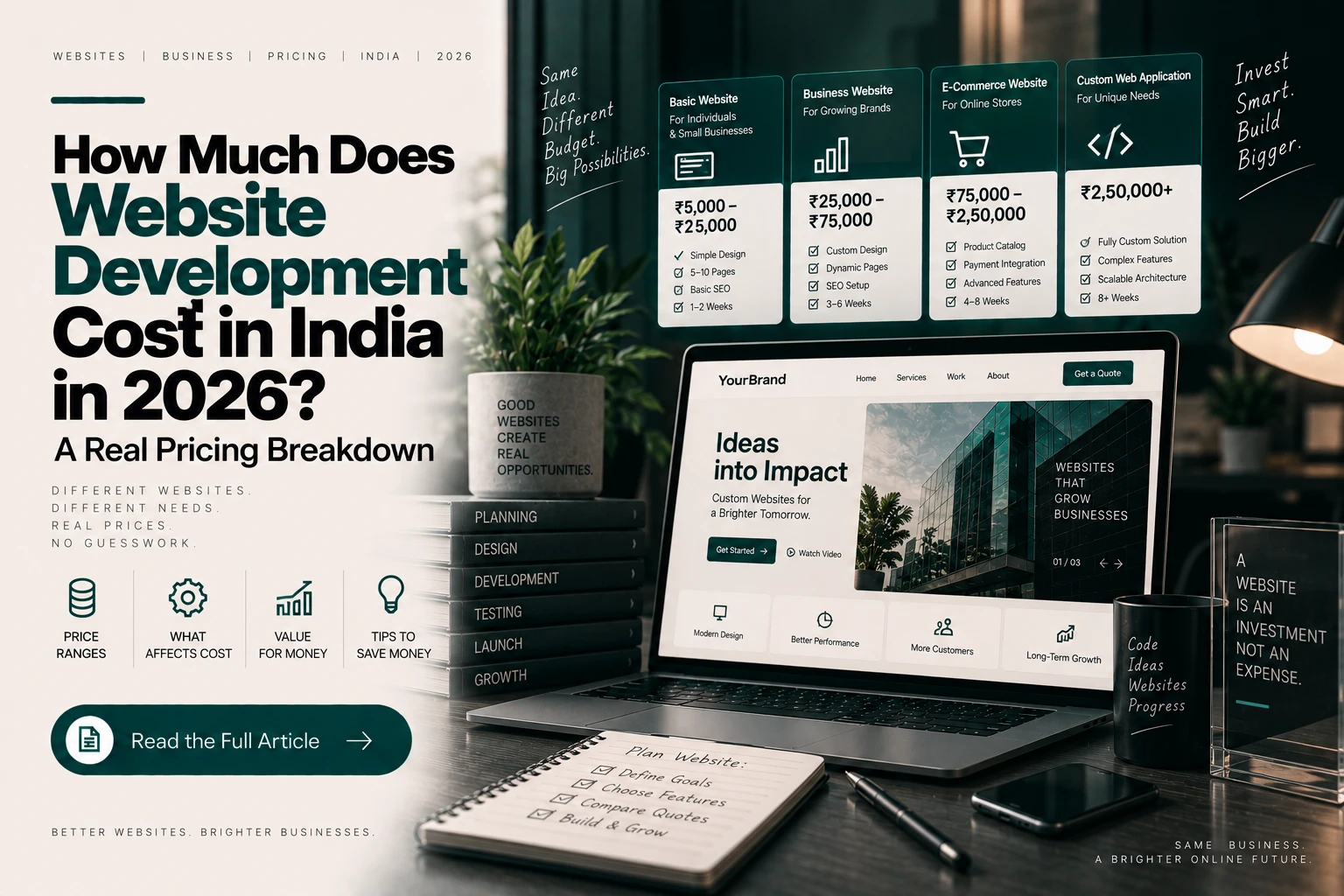
How much does digital marketing cost in India? Digital marketing costs in India vary by channel. SEO retainers typically cost ₹10,000–₹40,000/month. Google Ads budgets start effectively from ₹10,000–₹20,000/month. Social media management costs ₹5,000–₹20,000/month. Many businesses start with one channel and expand as results justify additional investment.
What is the difference between SEO and digital marketing? SEO (Search Engine Optimisation) is one component of digital marketing — specifically the practice of improving organic search rankings. Digital marketing is the broader category that includes SEO, paid advertising (Google Ads, Meta Ads), social media marketing, email marketing, and content marketing.

If you’re looking for a reliable Web Developer in Aligarh, look no further than Techno Alig. Contact us today to discuss your project and take the first step towards establishing a powerful online presence.



No spam, notifications only about new offers, services.
chat_bubble_outline Leave a Reply